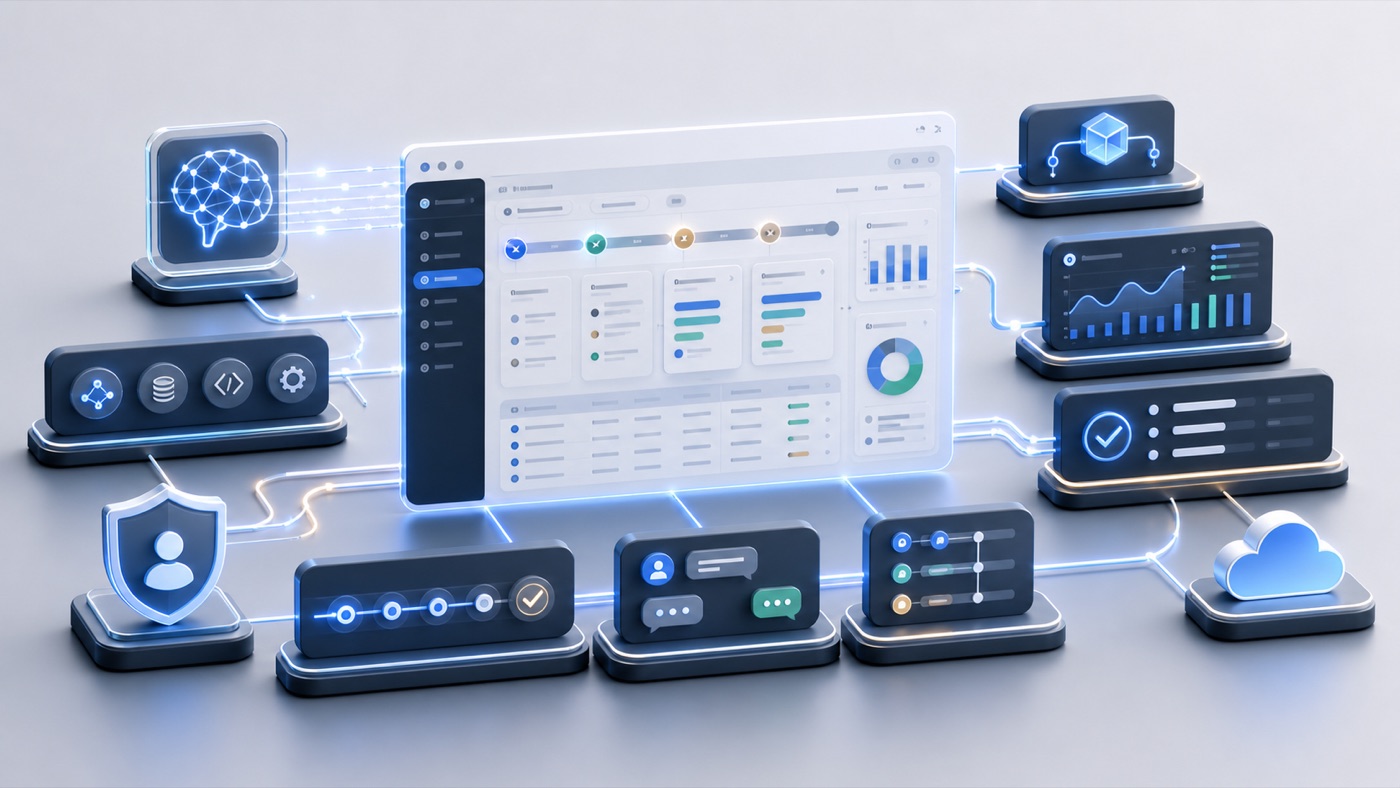
Generated code becoming a real enterprise application through runtime, auth, backend, observability, deployment, and collaboration layers

Why Generating Code Is Not Enough

AI is making code cheaper to produce. That is useful. It is also easy to misunderstand. The hard part of enterprise software was never only the act of typing code. Companies do not succeed because a screen exists. They succeed when that screen can execute a real workflow, respect permissions, connect to data, survive change, be monitored, be published, be audited, and evolve without becoming a liability. That is why the next phase of AI software will not be defined by who generates the most code. ...

May 6, 2026 · 6 min · Collab.codes Team
Modular enterprise software platform with open connections to interchangeable providers

No Lock-in Does Not Mean No Platform

There is a lazy version of “no lock-in” that sounds attractive but does not help companies very much. It says: take the code, leave the platform, and operate everything yourself. That is a valid option. But it is not always a good product experience. Enterprise teams do not only need ownership. They need execution. They need authentication, hosting, LLM access, cost control, observability, support, deployments, collaboration, and a path to evolve the software after the first version is shipped. ...

May 6, 2026 · 7 min · Collab.codes Team
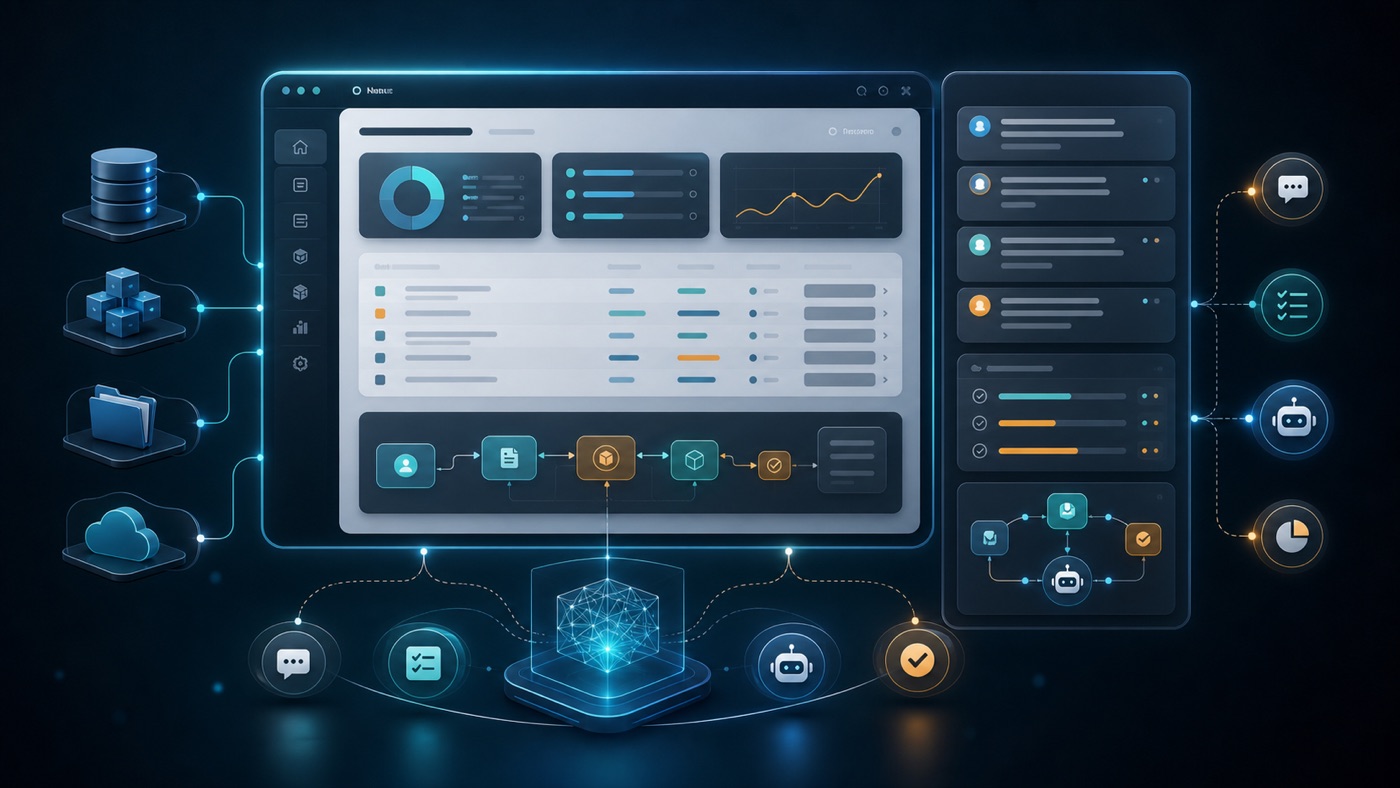
Business app workspace with collaboration, tasks, and AI agents integrated into the workflow

Why Business Apps Should Bring Chat, Tasks, and AI Agents Into the Workflow

Most business applications are designed as if work happens only inside forms, tables, dashboards, and reports. But that is not how companies operate. Real work happens in the space between screens. A manager asks a question. Someone sends a message. A task is created. A customer exception appears. A person needs approval. A support case needs context. An AI agent can help, but only if it understands where the work is happening. ...

May 6, 2026 · 6 min · Collab.codes Team
Abstract BFF layer connecting frontend screens to backend services

Why BFF Is Not Just Architecture

Backend for Frontend is usually described as an architecture pattern. That description is correct. But it is not enough. In enterprise software, BFF is not only about where an API lives. It is about where product intent becomes executable. It is the difference between a frontend that stitches data together and a system that understands what a screen is trying to accomplish. That difference matters more in 2026 than it did five years ago, because AI is changing how software is created. When AI helps generate screens, workflows, and business logic, the architecture needs to carry intent clearly. Otherwise, the generated software becomes fast to create and hard to govern. ...

May 6, 2026 · 6 min · Collab.codes Team
Modern enterprise application built with AI, runtime, BFF, collaboration, observability, auth, and publishing layers

How to Build Modern Enterprise Systems with AI in 2026

There is a question every company should be asking in 2026: if AI can already help us build software, why are we still choosing between heavy ERPs and generic SaaS? For years, that was the default tradeoff. On one side, the traditional ERP: powerful, expensive, slow to implement, hard to adapt, and often far away from how the business actually works. On the other side, modern SaaS: fast to start, polished, accessible, but often rigid. It solves the average problem well. The problem is that no serious company wants to become only the average of its market. ...

May 6, 2026 · 9 min · Collab.codes Team